When insulation work is carried out on a home, the quality of the installation is just as important as the insulation product itself.
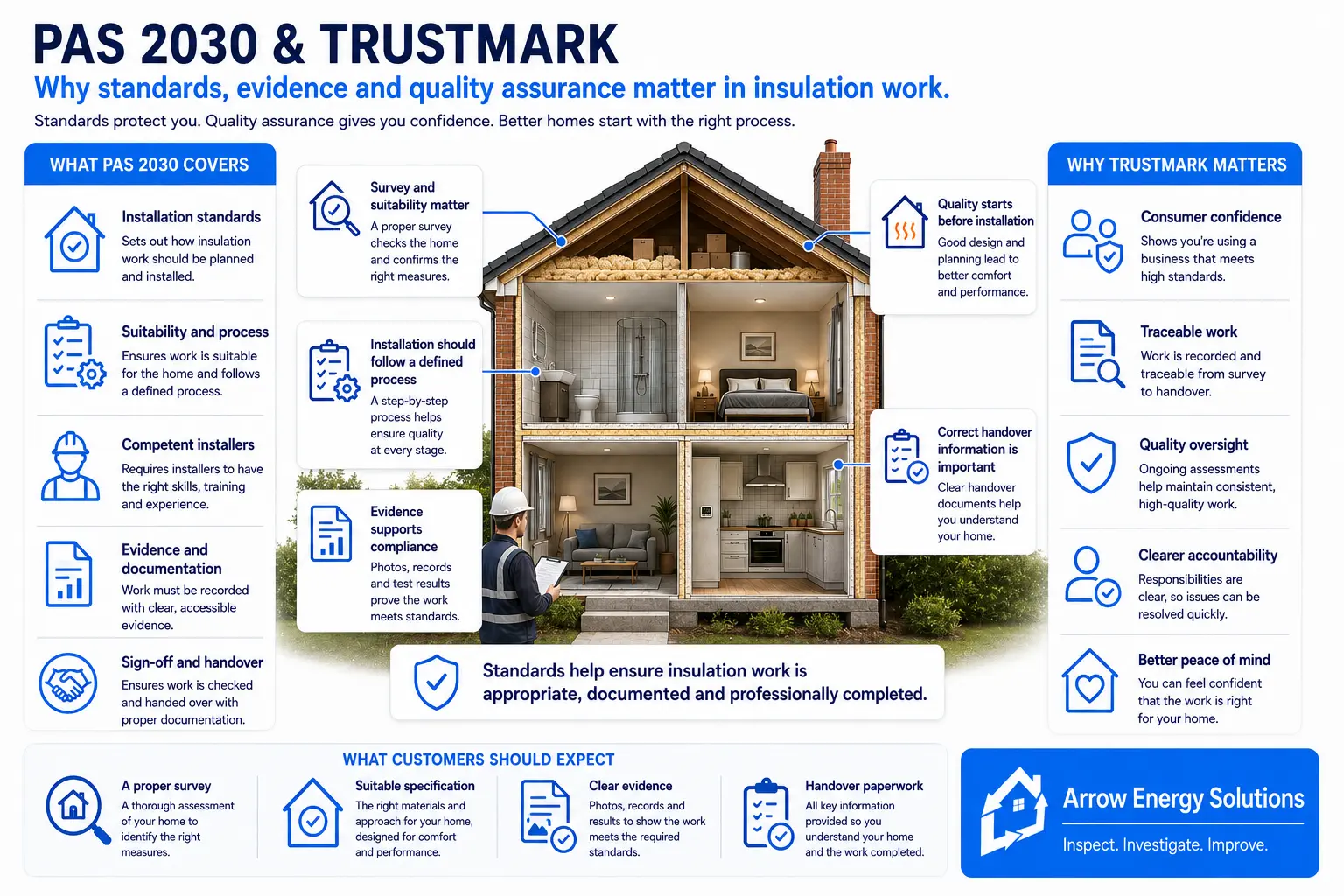
PAS 2030 and TrustMark form an important part of the quality framework used across the energy-efficiency industry.
They are designed to help ensure that work is assessed, installed, recorded and handed over correctly.
PAS 2030 is the installation standard used for energy-efficiency measures in existing buildings.
It sets requirements covering the way installers carry out measures such as insulation.
The standard is intended to ensure that work follows a defined process rather than simply being treated as a building job with no formal assessment or evidence.
For insulation work, this can include requirements relating to:
Installer competency
Property suitability
Installation methods
Quality control
Photographic evidence
Commissioning
Documentation
Customer handover
A good insulation installation starts before the installation team arrives.
The property needs to be assessed to determine whether the proposed measure is appropriate.
For cavity wall insulation, for example, this may involve checking:
Wall construction
Cavity width
Existing insulation
Exposure
Damp or building defects
Ventilation
Combustion appliances
Suitability of the cavity
Identifying problems before installation reduces the risk of inappropriate work being carried out.
PAS 2030 places emphasis on installers having the appropriate training, qualifications and competency for the measures they install.
Different insulation systems also have their own manufacturer requirements and installation procedures.
The installer therefore needs to understand both the general requirements of the standard and the specific system being used.
One of the major differences between formally controlled retrofit work and informal building work is the amount of evidence produced.
This may include:
Survey photographs
Pre-installation photographs
Installation photographs
Borescope images
Commissioning information
Product information
Installer declarations
Customer handover documentation
This creates a clearer record of what was done and how the work was completed.
TrustMark is the government-endorsed quality scheme covering work carried out in and around the home.
Registered businesses are required to meet scheme requirements relating to technical competence, customer service and trading practices.
For customers, TrustMark provides an additional level of reassurance that the contractor is operating within an established quality framework.
Using a TrustMark-registered business can provide greater confidence that:
The company has been assessed
Appropriate standards are being followed
Work is recorded and traceable
There are defined customer-protection requirements
The company is subject to ongoing oversight
It does not mean that every building will be suitable for every insulation measure.
The assessment of the individual property remains essential.
Customers may also hear the term PAS 2035.
While PAS 2030 principally concerns the installation of energy-efficiency measures, PAS 2035 provides the wider framework for assessing and managing domestic retrofit projects.
For certain funded or regulated projects, different roles may be involved, including retrofit assessment, design, coordination and installation.
The intention is to consider the home as a whole rather than treating each measure entirely in isolation.
Insulation is largely hidden once the work is complete.
This makes photographic evidence, commissioning records and proper documentation particularly important.
A customer should be able to understand what work has been completed and receive the relevant paperwork following installation.
A professionally managed insulation project should normally include:
An appropriate property assessment
Confirmation that the proposed measure is suitable
Installation by competent operatives
Work completed in accordance with the system requirements
Evidence of the installation
Appropriate quality checks
Relevant handover documentation
Arrow Energy Solutions operates within the recognised quality and compliance frameworks for insulation work.
Our approach is based around proper assessment, competent installation, photographic evidence and clear documentation.
Good insulation is not simply about putting material into a wall or loft.
It is about making sure the right measure is installed in the right property, using the right process.