There are types of insulation such as blown fibres, wools and urea formaldehyde foam that can lead to damp or performance problems either because they absorb moisture or have reached the end of their usefulness or because they were installed incorrectly.
Most houses built in the UK since 1930 have been built with a cavity wall: a wall formed from two thicknesses of masonry with an air space between them, which are held together with wall ties.
The air space ensures that any water which may enter the cavity either via wind driven rain or condensation simply drains down to the footings below the damp proof course, without crossing to the inner wall.
Cavity insulation fills this gap to create a thermal barrier. However should the insulation injected into the wall have been incorrectly installed or the wrong product then damp issue may occur. Cavity Extraction removes the insulation or blockages and obstructions found in some cavities that create cold spots and damp problems.
With the old failed insulation removed and should the home be suitable, new EPS Bonded Bead can be installed that negates issues of previous insulation types.
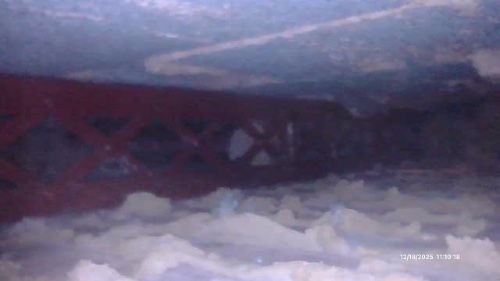
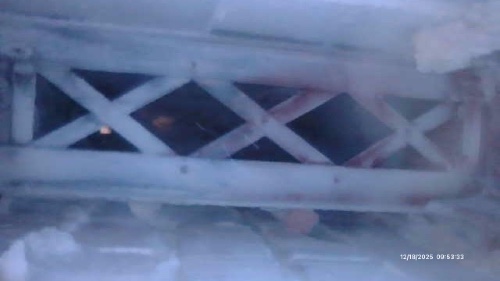
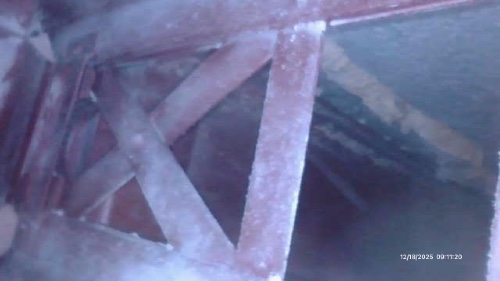
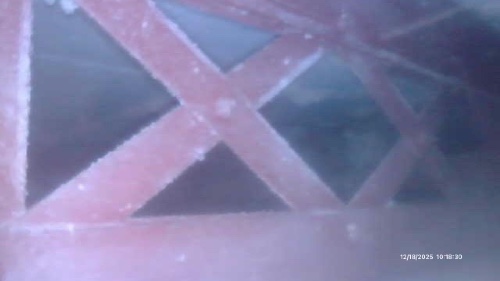
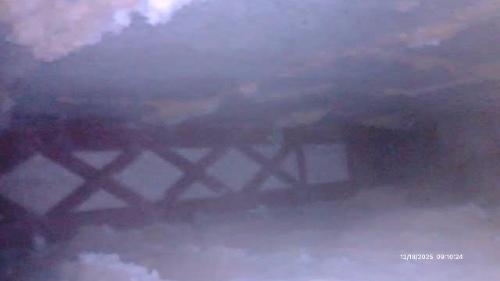
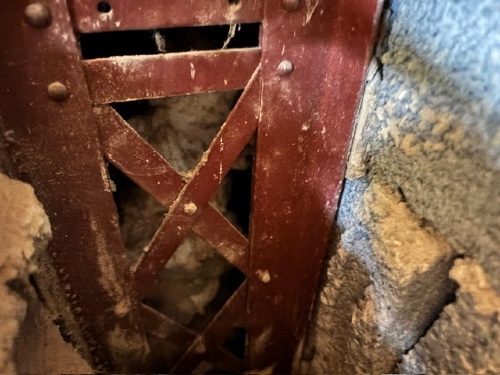
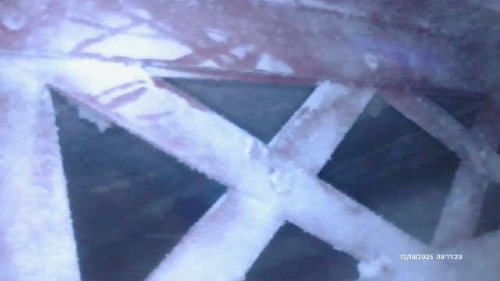
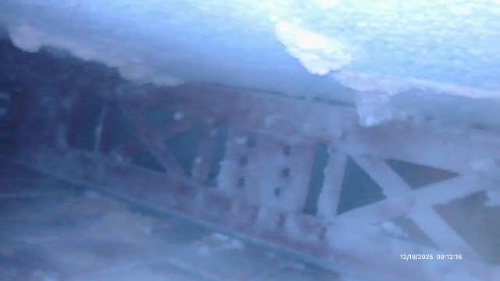
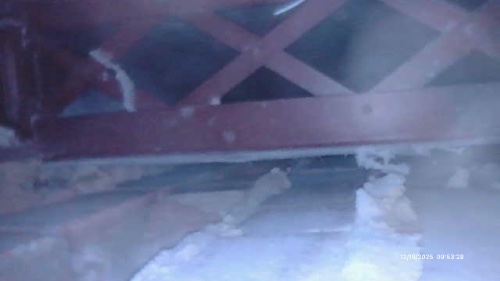
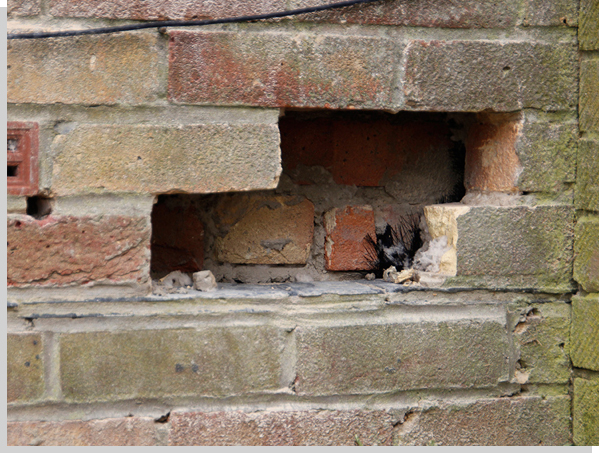
These photos are samples of slumped or missing blown fibres and wool or degraded urea formaldehyde foam insulation.
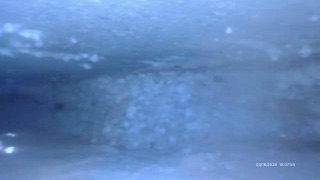
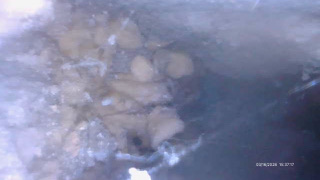
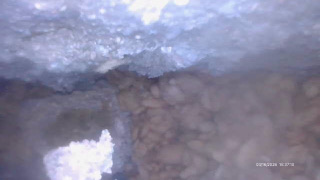
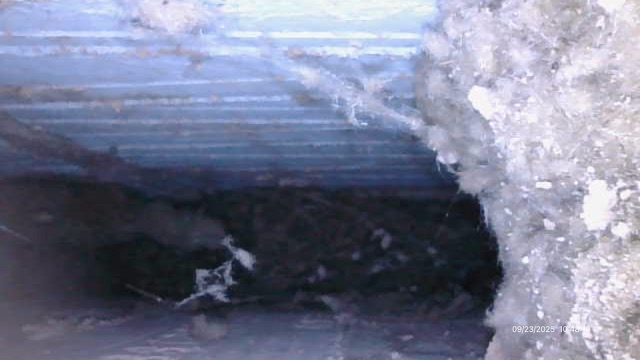
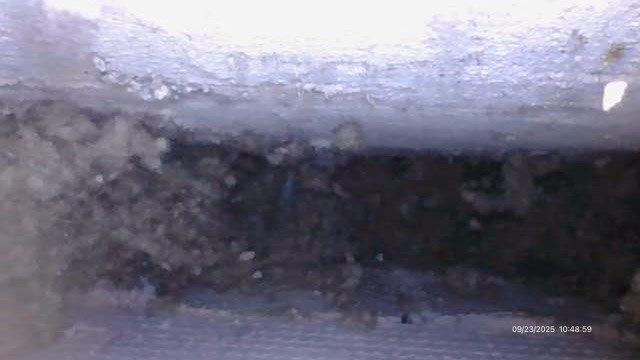
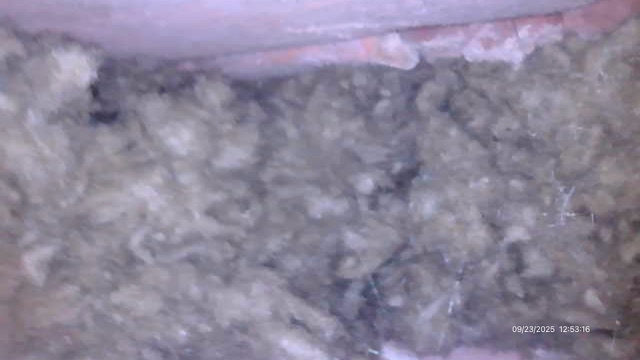
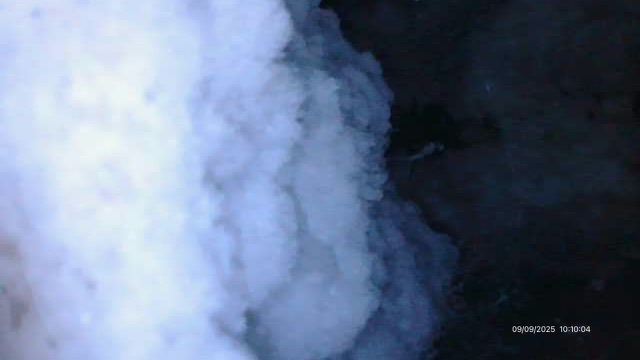
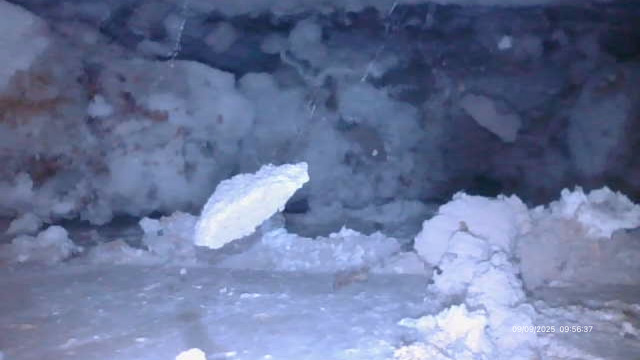
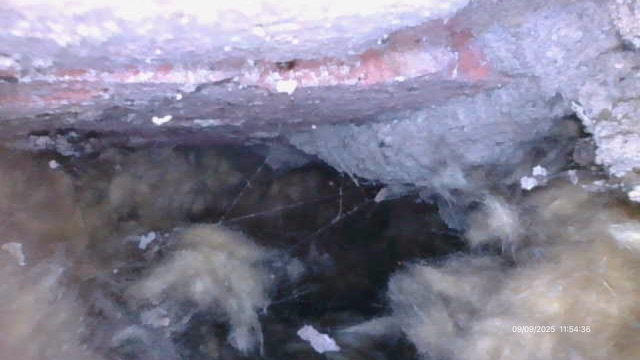
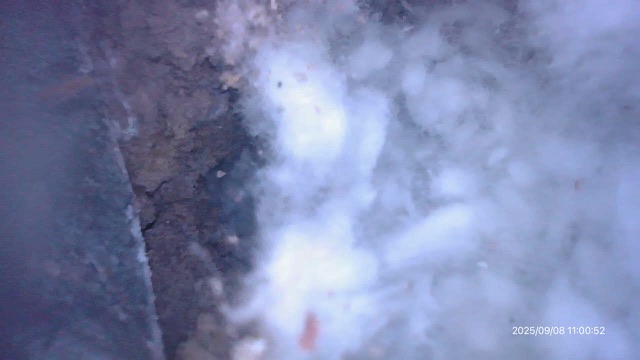
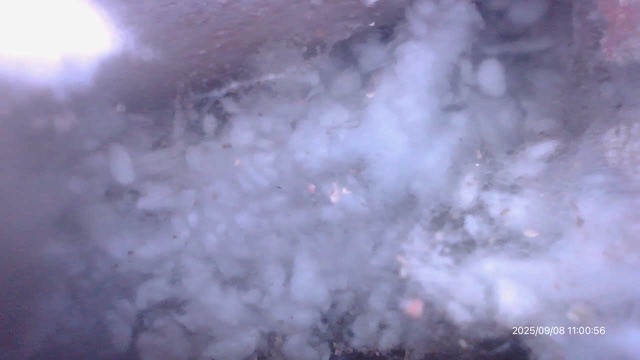
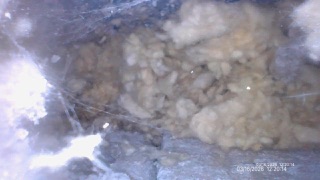
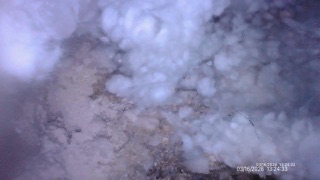
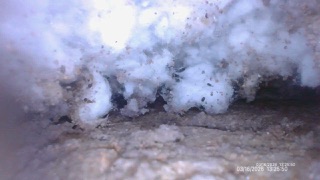
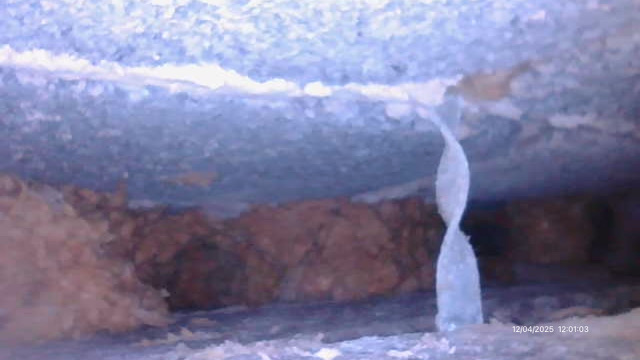
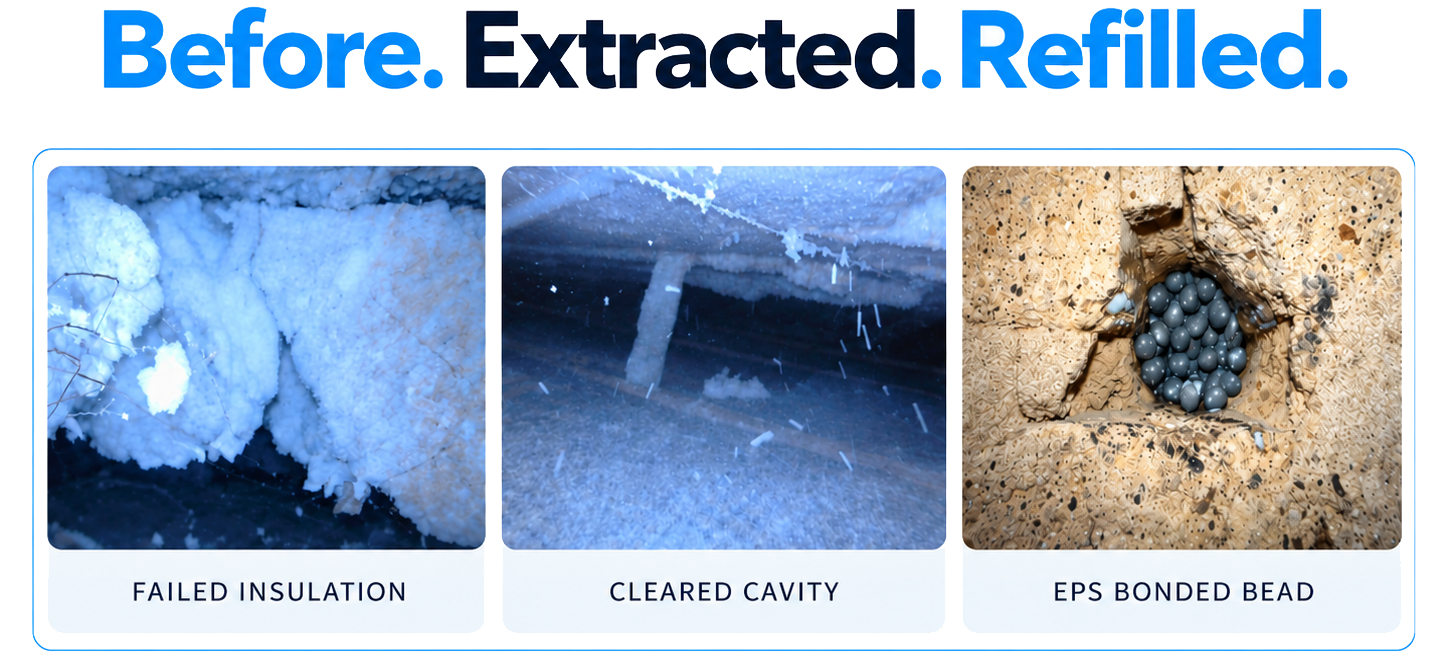
Keeping a home built with cavity walls free from damp depends on the air space remaining almost entirely free from blockages. Obstructions between the two walls can form a bridge and allow moisture to penetrate through to the interior of the house. This moisture penetration can lead to damp and mould problems, if left untreated.
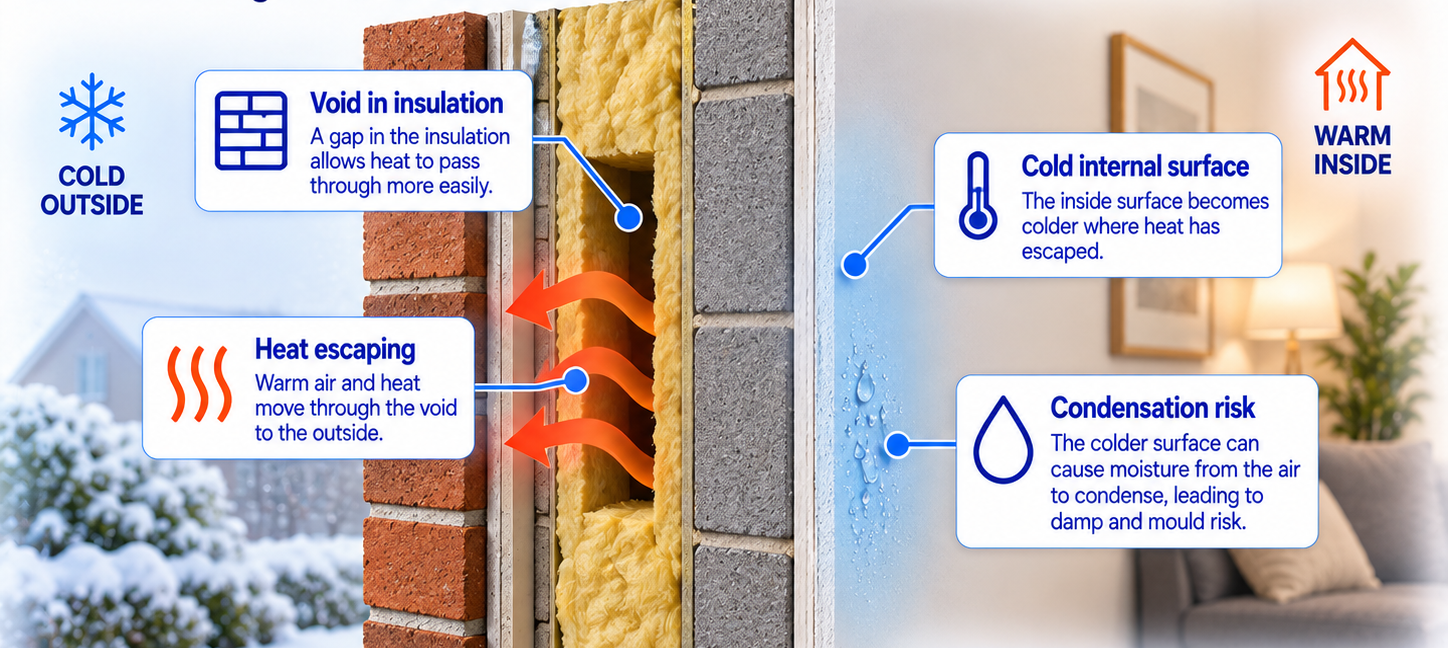
A void in insulation can lead to cold spots which will potentially lead to condensation and mould also.
Why will this happen:
Cavity wall insulation should not be installed in steel-framed properties, as it can conceal the condition of the steelwork and increase the risk of moisture being retained around the frame, potentially leading to corrosion.
Its presence can also cause serious problems when selling or remortgaging the property. Many mortgage lenders will not lend on a steel-framed home where cavity wall insulation is present and may require full removal before considering the property suitable for lending.
Professional extraction allows the cavity and steel frame to be inspected and helps restore the property’s mortgageability.
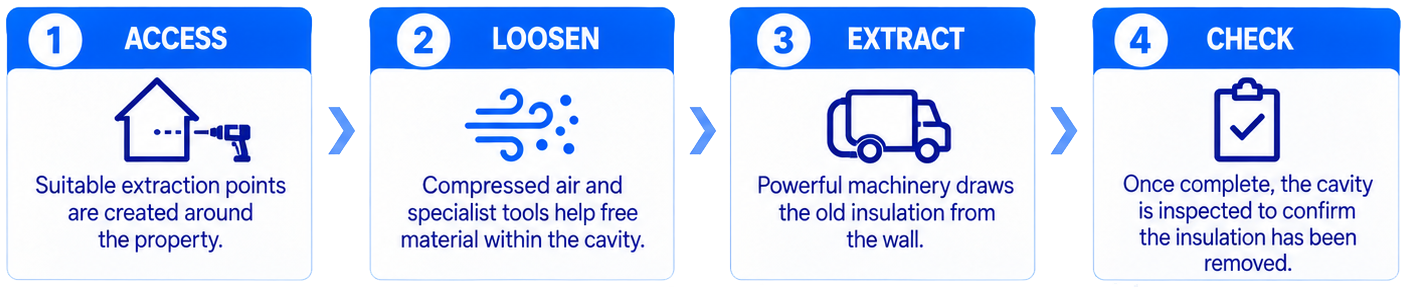
Once the survey is complete, the extraction method can be planned.
The working area is prepared and access is arranged around the affected walls. Depending on the height and layout of the property, this may require:
Windows, doors, vents, paths and nearby surfaces are protected where necessary.
The team will also identify suitable positions for the extraction hose and compressed-air equipment.
Controlled access points are formed through the external wall.
These may be created by:
The correct method depends on the wall construction and the insulation being removed.
The aim is to create enough access to remove the material thoroughly while limiting disruption to the external finish.
Some insulation materials are loose and can be extracted relatively easily. Others may need to be broken down first.
Compressed air is introduced into the cavity through carefully positioned holes. This helps loosen the material and direct it toward the extraction point.
For more rigid or deteriorated materials, such as old urea formaldehyde foam, specialist tools may be used to break the insulation into smaller pieces.
The work is carried out in sections so that the cavity can be cleared methodically.
A high-powered industrial vacuum system removes the insulation from the cavity.
The material travels through extraction hoses into a sealed collection unit or waste container.
The team works progressively across each wall, using air pressure and suction to draw out:
The exact process will vary depending on the material and condition of the cavity.
Cavity wall insulation is hidden from view, and no two properties are exactly the same.
Extraction may be slowed by:
A thorough extraction should not be rushed.
Removing only the easily accessible material can leave substantial insulation behind and may prevent the cavity from drying or being refilled correctly.
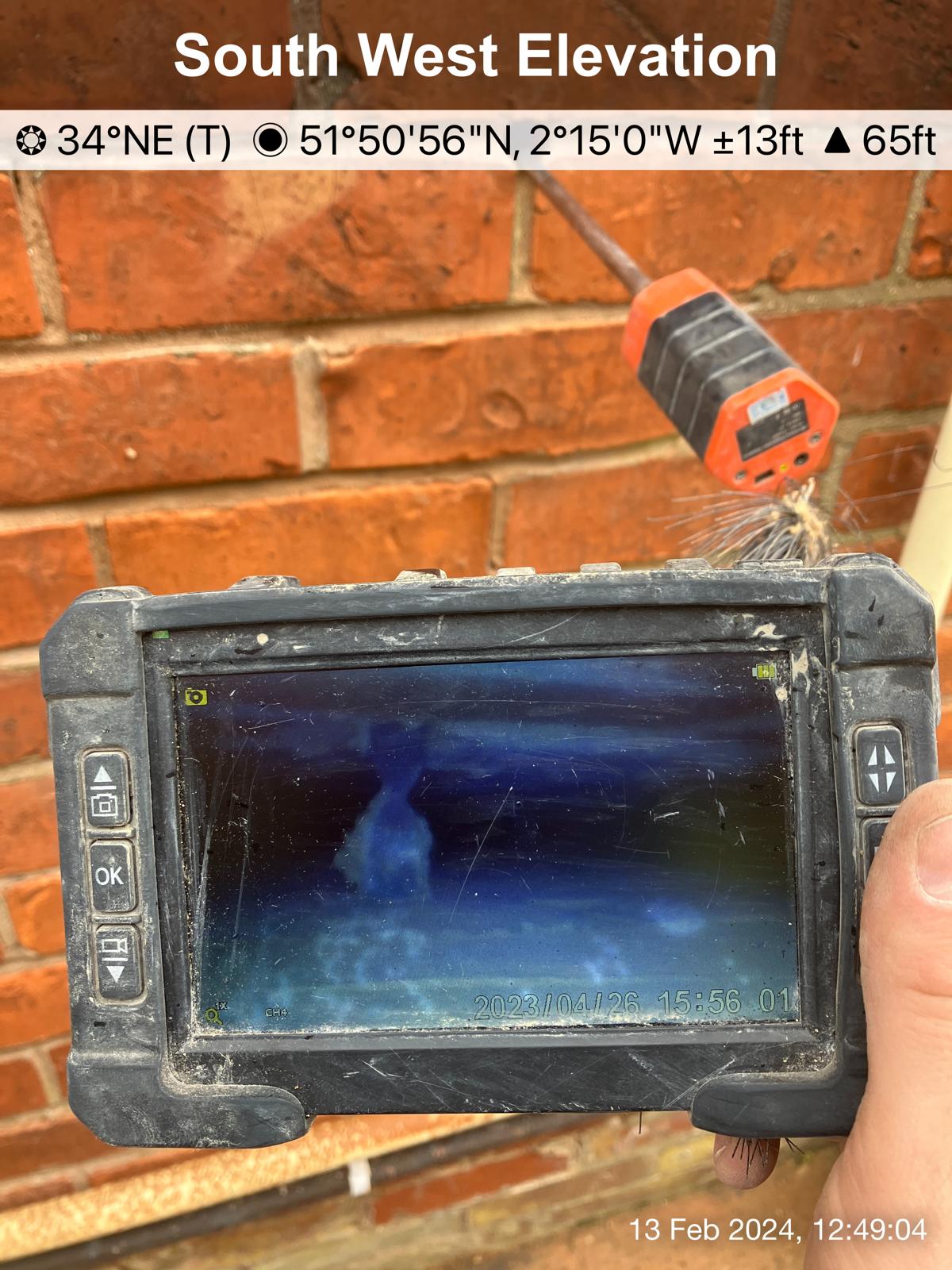
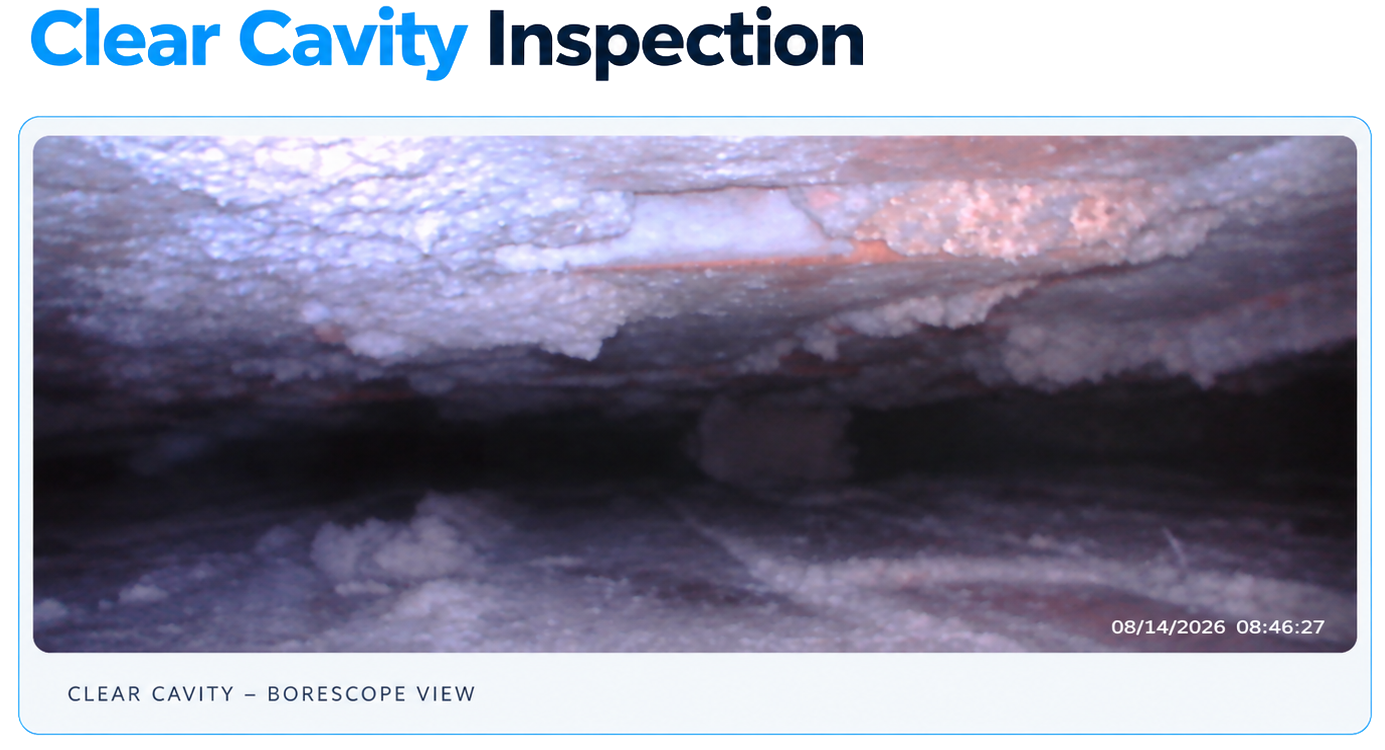
Borescope inspections are carried out throughout the extraction.
These checks help confirm:
The team should not rely only on what comes out through the extraction hose.
The cavity itself must be inspected repeatedly.
Certain parts of a wall are more difficult to clear, including:
Additional access points may be required to clear these areas properly.
Where cavities are heavily obstructed, some material may be impossible to remove without more extensive building work. Any limitations should be explained clearly to the customer.
Once the extraction is complete, access holes are repaired.
This may include:
Exact colour matching cannot always be guaranteed, especially on older or weathered brickwork, but repairs should be neat and appropriate for the property.
Removed insulation is collected and disposed of responsibly.
The disposal method depends on:
The material should not be left loose around the property or allowed to enter drains, gardens or neighbouring land.
The timescale depends on:
A straightforward property may be completed relatively quickly, while a large or heavily obstructed building can take considerably longer.
The survey should provide a clearer indication before work begins.
Extraction equipment and compressors create noise while they are operating.
There will also be drilling and, in some cases, brick removal.
The work is generally carried out externally, but occupants will hear some of the process inside the property.
Customers should be advised to keep windows closed during the extraction and to keep children and pets away from the working area.