
For landlords, providing a rental property is not simply about meeting a minimum legal standard or collecting rent each month.
A rental home should be safe, comfortable, healthy to live in and affordable to heat. Properties that suffer from damp, mould, cold rooms or poor energy efficiency are more likely to generate complaints, require reactive maintenance and create problems for both tenants and landlords.
Awaab’s Law has reinforced the importance of dealing with damp and mould properly and without delay. It reflects a wider expectation across the housing sector that homes must be maintained in a condition that supports tenant health and wellbeing.
For landlords, this is not only a legal and moral issue. It is also a practical and financial one.
Awaab’s Law was introduced following the tragic death of Awaab Ishak, a two-year-old child who died after prolonged exposure to mould in the family home.
The law was designed to strengthen how serious hazards such as damp and mould are addressed, particularly by requiring landlords to investigate and respond within defined timescales.
While the legal framework and implementation details should always be checked against the latest guidance, the message is clear:
Damp and mould must be taken seriously
Tenants’ concerns must not be ignored or delayed
Hazards should be investigated properly
Landlords should not place blame on occupants without evidence
Action should be prompt, documented and effective
A landlord cannot simply clean visible mould, redecorate the wall and consider the matter closed if the underlying cause remains unresolved.
Damp and mould are often treated as though they are minor maintenance problems.
They are not.
They may indicate that a home is suffering from:
Condensation due to cold surfaces
Inadequate ventilation
Poor insulation
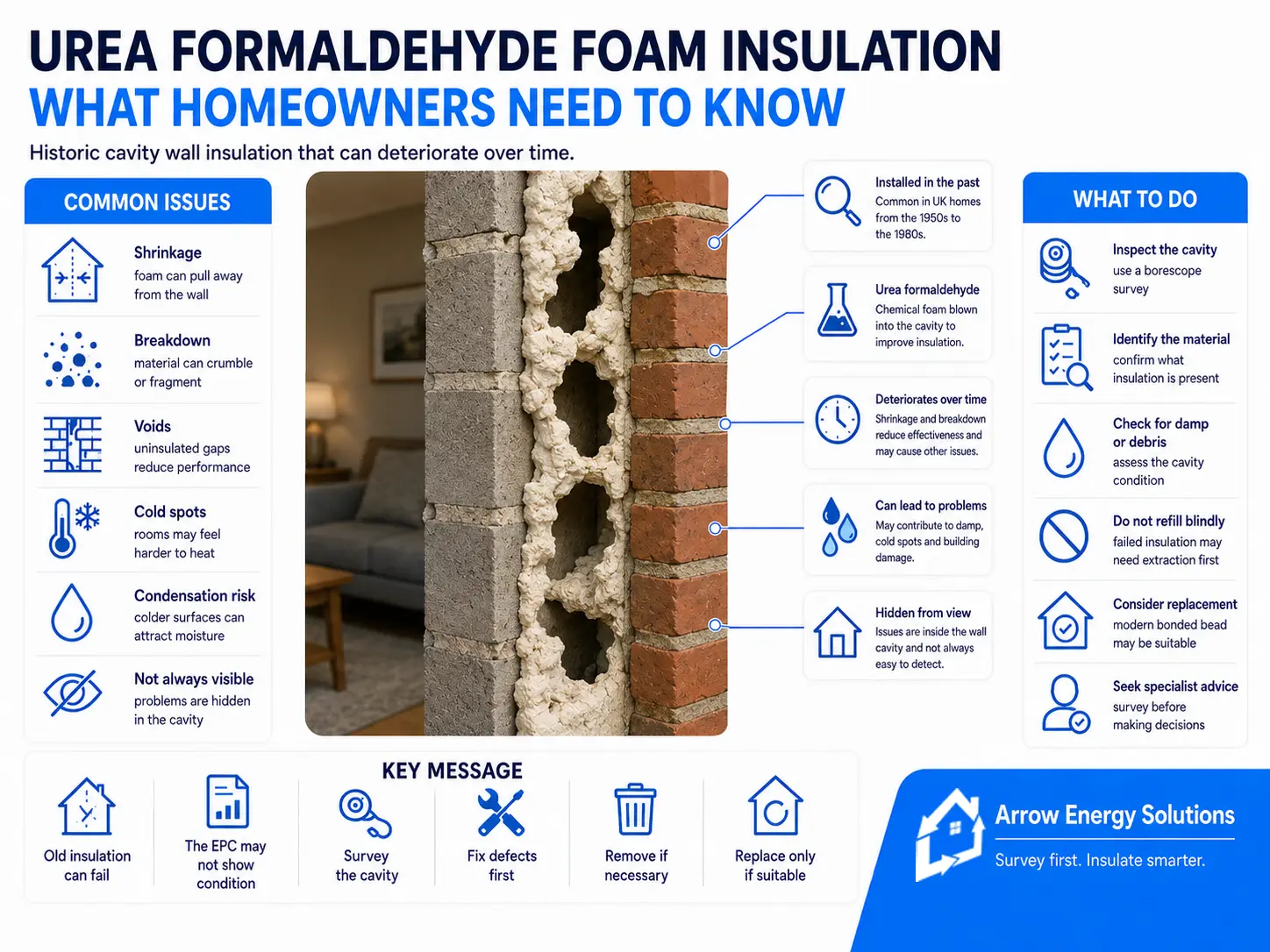
Failed cavity wall insulation
Water penetration from outside
Plumbing leaks
Thermal bridging
Blocked or bridged cavities
High humidity and insufficient heating
Structural or building-fabric defects
For tenants, these issues can affect:
Respiratory health
Asthma and allergies
Comfort and wellbeing
Sleep quality
Heating costs
Use of rooms
The overall enjoyment of the property
A home that is cold, damp and expensive to heat is not a good home, even if the decoration initially appears acceptable.
Many damp and mould problems are linked to the way heat, moisture and ventilation interact inside a property.
Common contributing factors include:
Uninsulated or poorly insulated cavity walls
Inadequate loft insulation
Failed historic insulation
Cold bridging around windows, lintels and corners
Poor extraction in kitchens and bathrooms
Leaking gutters or downpipes
Cracked render or failed pointing
High external ground levels
Limited background ventilation
Rooms that are difficult or expensive to heat
Homes shaded by trees or exposed to driving rain
If surfaces remain cold, condensation is more likely to form. If that moisture cannot escape and the building does not dry properly, mould often follows.
This is why landlords should think in terms of the whole property, not just a patch of mould on a wall.
Historically, damp and mould issues were sometimes blamed almost entirely on “lifestyle”.
While occupant behaviour can influence moisture levels, this should never be used as a convenient default explanation.
Tenants may be cooking, washing and bathing normally. If the home is poorly insulated, badly ventilated or too expensive to heat properly, condensation problems may still occur even where the tenant is acting reasonably.
Landlords should avoid simplistic assumptions such as:
“The tenant just needs to open the windows”
“It is only condensation”
“It is caused by drying clothes”
“The house has always been like that”
“We cleaned it last year”
The correct approach is to investigate the property properly and identify the actual cause.
A structured response should include:
Acknowledge the complaint and arrange inspection without unnecessary delay.
Do not assume the problem is only condensation. Check for:
Water ingress
Defective rainwater goods
Plumbing leaks
Missing insulation
Failed cavity wall insulation
Inadequate loft insulation
Thermal bridges
Ventilation problems
Heating-system issues
Keep clear records of:
Tenant reports
Inspection dates
Photographs
Moisture findings
Survey conclusions
Work completed
Follow-up actions
Treat the cause, not just the visible symptom.
Check that the property is drying, mould is not returning and the tenant is able to heat and use the home properly.
Insulation is not only about reducing bills.
It also helps create warmer internal wall and ceiling surfaces, which can reduce the likelihood of condensation forming in the first place.
For landlords, suitable insulation can help:
Improve tenant comfort
Reduce heating demand
Lower the risk of cold spots
Reduce condensation and mould risk
Improve EPC performance
Support lower-temperature heating systems
Make the property more attractive to tenants
Reduce complaints and maintenance call-backs
This is especially important in homes where tenants may be vulnerable, on tighter budgets or unable to heat the property aggressively during winter.
Many landlords assume that because an EPC says the walls are insulated, the home must be performing well.
That is not always the case.
An EPC may record that cavity wall insulation is present, but it cannot usually confirm:
What product is inside the cavity
Whether it remains in good condition
Whether it fills the cavity evenly
Whether it has slumped or deteriorated
Whether it has become damp
Whether the cavity contains debris
Whether extraction or replacement is required
Some homes still contain older foam or fibre insulation that may have deteriorated over time. Others may have partial fill, voids or issues caused by water ingress.
A cavity wall borescope inspection can help establish what is actually present and whether it is still performing as intended.
A rental property may also underperform because of poor loft insulation.
Common issues include:
Insufficient insulation depth
Uneven coverage
Insulation compressed by boarding
Gaps around eaves
Missing insulation above one room
Condensation in the loft
Bathroom fans discharging into the roof space
At the same time, improving insulation must be balanced with suitable ventilation.
A warmer, more efficient home still needs moisture to be removed properly through extract fans, background ventilation and sensible airflow.
Some landlords view insulation or damp remedial work only as a compliance cost.
In reality, improving the building fabric can often protect and improve the long-term return on investment.
A more comfortable, efficient property may offer:
Better tenant satisfaction
Longer tenancies
Reduced void periods
Fewer complaints
Less reactive mould treatment
Lower repair costs linked to damp
Better property condition over time
Improved marketability
Stronger EPC performance
Better future readiness for regulation or financing expectations
A cold and damp property can quietly erode returns through repeated maintenance, difficult tenant relationships, complaints, reputational damage and more frequent turnover.
A landlord’s return is not just about gross yield.
It is also affected by:
Maintenance frequency
Property deterioration
Insurance issues
Complaint handling time
Agent involvement
Legal exposure
Vacancy periods
Reletting costs
Redecoration cycles
Pressure to discount rent
If insulation, ventilation and damp defects are addressed properly, the property is more likely to remain in good condition and generate a steadier income.
In many cases, prevention is far cheaper than repeated reactive works.
Landlords should consider:
Does the property have any history of damp or mould?
Are there cold rooms or regularly complained-about areas?
Is the loft insulation adequate?
Has the cavity wall insulation ever been inspected?
Is there older foam or fibre insulation present?
Are extractor fans working properly?
Are rainwater goods in good condition?
Are there signs of condensation or mould around windows and corners?
Is the EPC based on assumption or actual evidence?
Is the home expensive for tenants to heat?
Are there vulnerable occupants in the property?
Would the building benefit from a proactive fabric inspection?
A proactive survey is often far more effective than waiting for a tenant to escalate a complaint.
A good rental property should not only meet the minimum standard. It should be a home that tenants can live in comfortably and safely.
Warmth, dryness, ventilation and energy efficiency all work together. When one part is missing, tenant comfort and building condition can quickly suffer.
For landlords, taking these issues seriously is about more than compliance. It is about protecting the property, supporting tenant wellbeing and securing a better long-term return.
Arrow Energy Solutions provides specialist property inspections and insulation services for landlords across the South of England.
We can assist with:
Cavity wall inspections
Identification of cavity insulation type and condition
Failed insulation diagnosis
Cavity wall insulation extraction
Replacement bonded-bead insulation
Loft insulation surveys and upgrades
Damp and condensation investigations
Pre-works advice for improving comfort and efficiency
If you manage or own rental property, proactive investigation can help you avoid more serious issues later.