Urea formaldehyde foam insulation, often shortened to UFFI or UF foam, was installed in the cavity walls of many UK homes during the 1970s and 1980s.
At the time, it offered a convenient way to insulate existing properties. Two liquid components were mixed together and injected into the wall cavity, where they reacted to form a lightweight insulating foam.
However, decades later, many properties containing this material are experiencing problems.
Historic concerns surrounding UF foam largely related to the release of formaldehyde gas during installation and while the material was curing.
Formaldehyde can irritate the eyes, nose, throat and respiratory system when present at sufficient concentrations. This led to understandable concerns about the safety of early UF foam installations, particularly where the mixture was incorrectly prepared or installed.
Once correctly cured and contained inside a wall cavity, emissions would normally be expected to reduce substantially. However it is vernally thought that by now that the concerns of formaldehyde should not exist.
The most common problem seen today is not necessarily toxicity. It is physical deterioration.
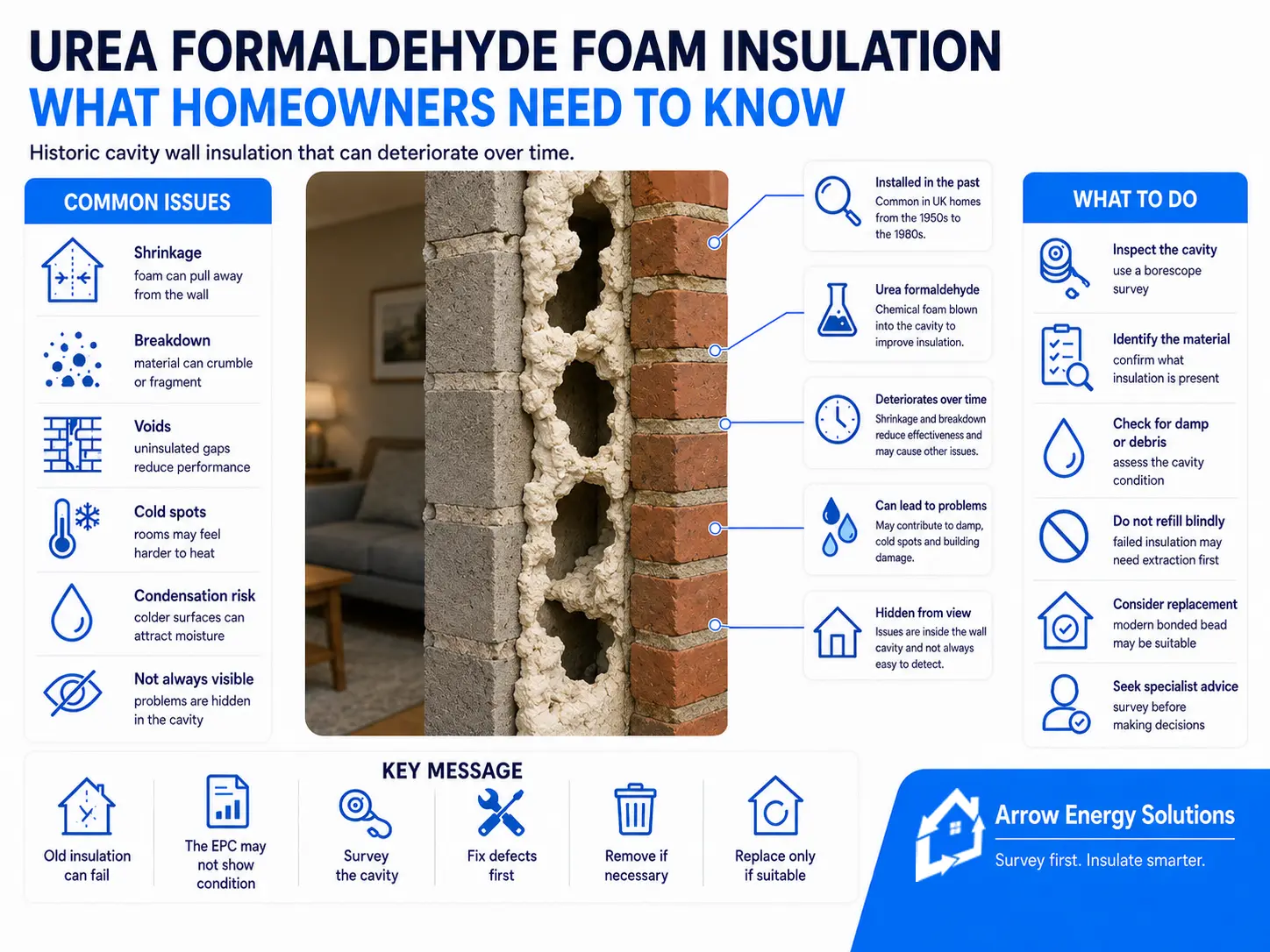
Unlike modern bonded-bead insulation, UF foam can shrink, crack and break down as it ages. It may separate from the sides of the cavity or collapse into loose material at the bottom of the wall.
This can leave substantial areas of the property with little or no effective insulation.
Common problems include:
Shrinkage away from the internal and external walls
Cracking and fragmentation
Large uninsulated gaps within the cavity
Material settling toward the bottom of the wall
Inconsistent thermal performance
Cold spots on internal walls
Increased risk of condensation in colder areas
Difficulties installing a modern replacement system
Some installations may remain in better condition than others, which is why the cavity should be inspected rather than assumptions being made solely from the age of the property.
UF foam cannot normally be fully assessed from inside the home.
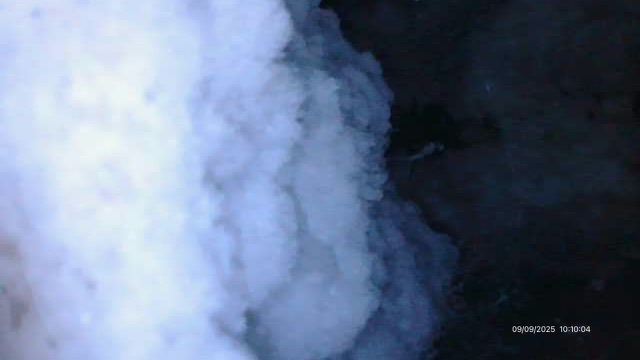
A professional cavity wall survey may involve drilling small inspection holes and using a borescope camera to examine the material within the cavity.
The survey should establish:
What type of insulation is present
Whether it has shrunk or deteriorated
How evenly the cavity was filled
Whether there are significant voids
Whether moisture, debris or obstructions are present
Whether the material can be removed safely
Whether the property may be suitable for replacement insulation
Thermal imaging may also help identify areas of uneven insulation, although it should normally be used alongside a physical cavity inspection.
New insulation should not simply be injected into a cavity that still contains deteriorated UF foam.
The remaining material can obstruct the cavity and prevent a replacement product from being distributed evenly. Filling around failed insulation may leave hidden voids, create inconsistent density and result in an ineffective installation.
Where removal is required, the old insulation should normally be extracted before the walls are assessed for a suitable modern replacement.
Specialist extraction generally involves creating controlled access points in the external wall and using compressed air, extraction equipment and cavity inspection cameras to break down and remove the material.
UF foam can be fragile and difficult to remove completely. The work must therefore be methodical, with ongoing checks undertaken throughout the extraction.
Once the material has been removed, the cavity should be inspected again before any new insulation is installed.
The presence of UF foam does not automatically mean that a home is unsafe. However, it does mean that the age, condition and effectiveness of the insulation should be properly assessed.
Arrow Energy Solutions provides specialist cavity wall surveys and insulation extraction services throughout the South of England.
We can inspect the cavity, identify the material present and provide clear advice on whether removal or replacement is recommended.